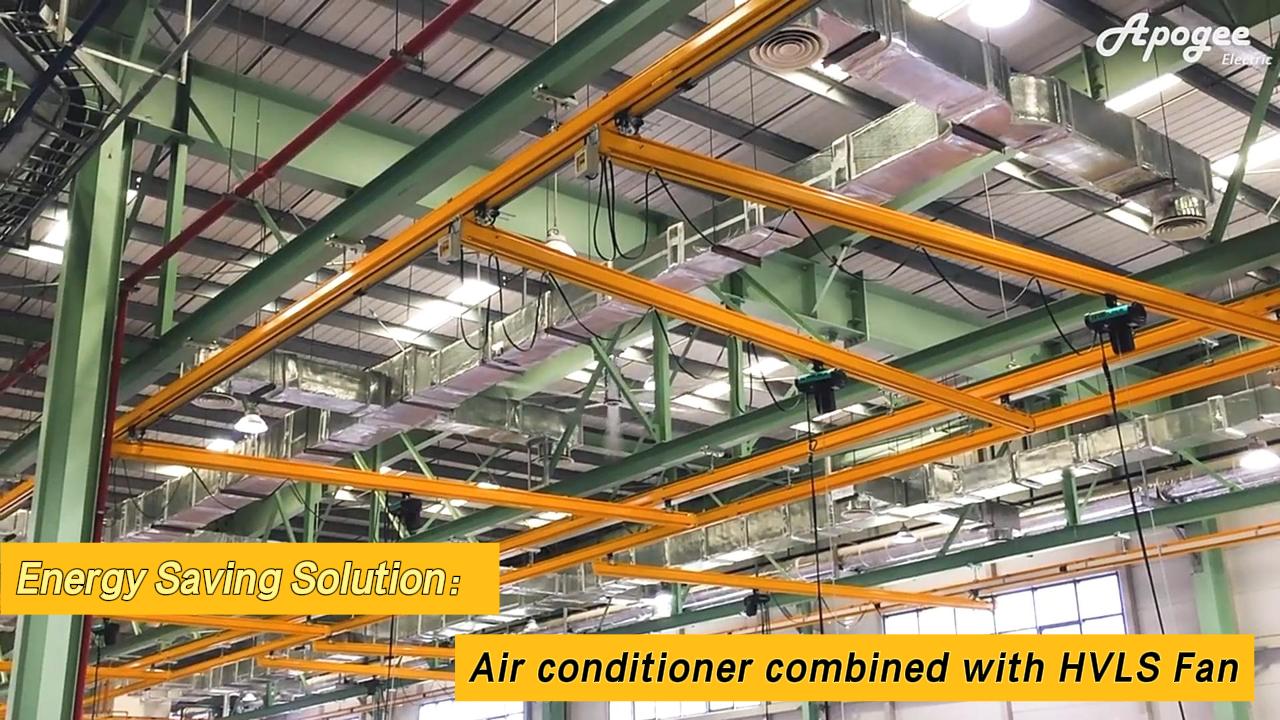

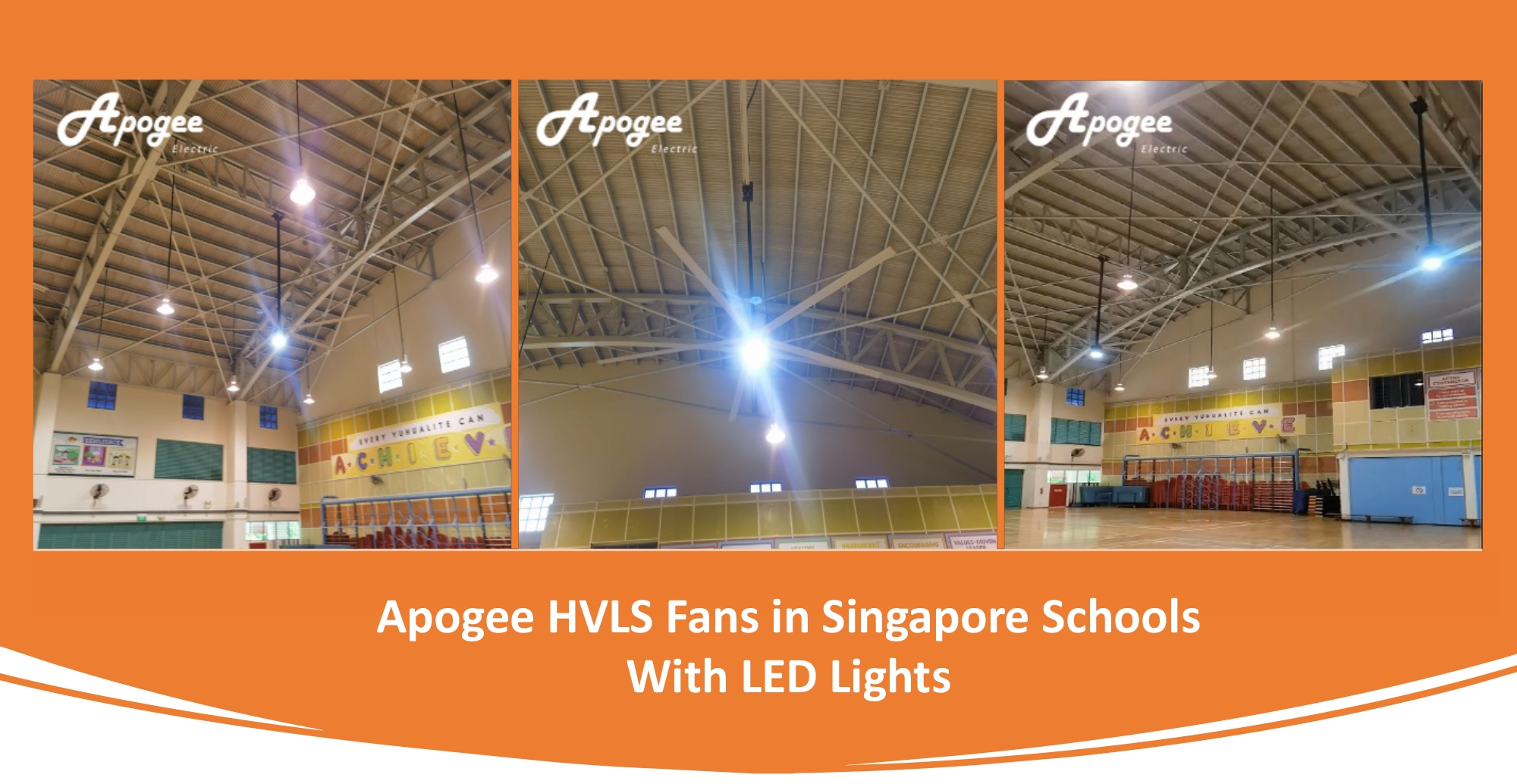
The Modern Industrial Manufacturing Landscape & Environmental Dynamics
Industrial manufacturing plants operate under strict pressure to maintain continuous productivity, safeguard machinery integrity, and lower operational overhead. Modern facilities—spanning auto assembly plants, heavy equipment production lines, high-precision machining hubs, and electronics manufacturing facilities—are characterized by vast spatial footprints and soaring ceiling heights that often exceed 6 to 15 meters. While these large spaces facilitate heavy machinery operation and expansive supply chain logistics, they create severe thermal and air circulation challenges.
One of the primary thermodynamic issues in industrial manufacturing is thermal stratification. Warm air produced by high-bay machinery, processing furnaces, and natural solar loading rises toward the ceiling, creating an inaccessible layer of trapped heat. Concurrently, cooler, denser air settles near the working floor. This phenomenon results in floor-to-ceiling thermal differentials of up to 10°C to 15°C. Traditional HVAC systems attempt to bridge this thermal gap by pumping massive volumes of conditioned air into the building, leading to astronomical energy expenses and inefficient heating/cooling loops.
Deploying Industrial HVLS Fans (High-Volume Low-Speed Fans) provides a masterclass in aerodynamic engineering and environmental control. Operating at low rotational speeds while driving massive columns of air downward, industrial ceiling fans destratify the atmosphere, equalize temperature throughout the enclosure, and generate continuous micro-breezes that reduce perceived temperatures by up to 5°C to 8°C on human skin via evaporative cooling.
Thermal Destratification
Eliminates stagnant air layers in high-bay manufacturing plants, balancing floor-to-ceiling temperatures to lower HVAC energy draw by up to 30% during winter and summer cycles.
Microclimate Stability
Prevents humidity accumulation and condensation (sweating slab syndrome) on floor areas, expensive CNC machinery, precision tooling, and sensitive electronic assemblies.
Operational Cost ROI
Permanent Magnet Synchronous Motor (PMSM) technology delivers ultra-low power consumption, direct-drive maintenance-free operation, and fast payback periods.
Specialized Industrial Manufacturing Application Scenarios
Industrial HVLS fans are far more than simple cooling devices; they are strategic assets in microclimate engineering, air quality management, and process reliability across diverse manufacturing sectors.
1. Automotive Assembly and Parts Production Plants
Automotive facilities combine continuous conveyor systems, automated robotic welding bays, and stamping operations. The localized thermal radiation from welding units and heat-treating furnaces creates severe heat pockets. HVLS fans generate expansive, non-disruptive airflow patterns across assembly corridors, dispelling localized heat spikes, dissipating process airborne particles, and ensuring worker endurance without disrupting sensitive automated robotics sensors or paint shop airflow buffers.
2. Heavy Metal Fabrication, Welding, and CNC Machining Hubs
In metal fabrication shops, high-power lasers, plasma cutters, and CNC milling spindles output continuous heat while generating oil mists and welding fumes. Without proper air velocity, airborne pollutants linger in worker breathing zones. HVLS fans work in tandem with industrial roof exhaust vents by driving ambient air downward and creating continuous horizontal displacement, accelerating bad air exchange and preventing humidity-induced flash rusting on stored raw metals and raw sheet steel.
When warm, humid air contacts cold concrete factory floors or cold raw metal parts, water droplets condense, causing dangerous slip hazards for forklift operations and promoting metal oxidation. Industrial HVLS fans maintain steady air movement over floor surfaces, elevating floor surface temperatures above dew point and evaporating moisture rapidly.
3. Electronics and High-Precision Component Manufacturing
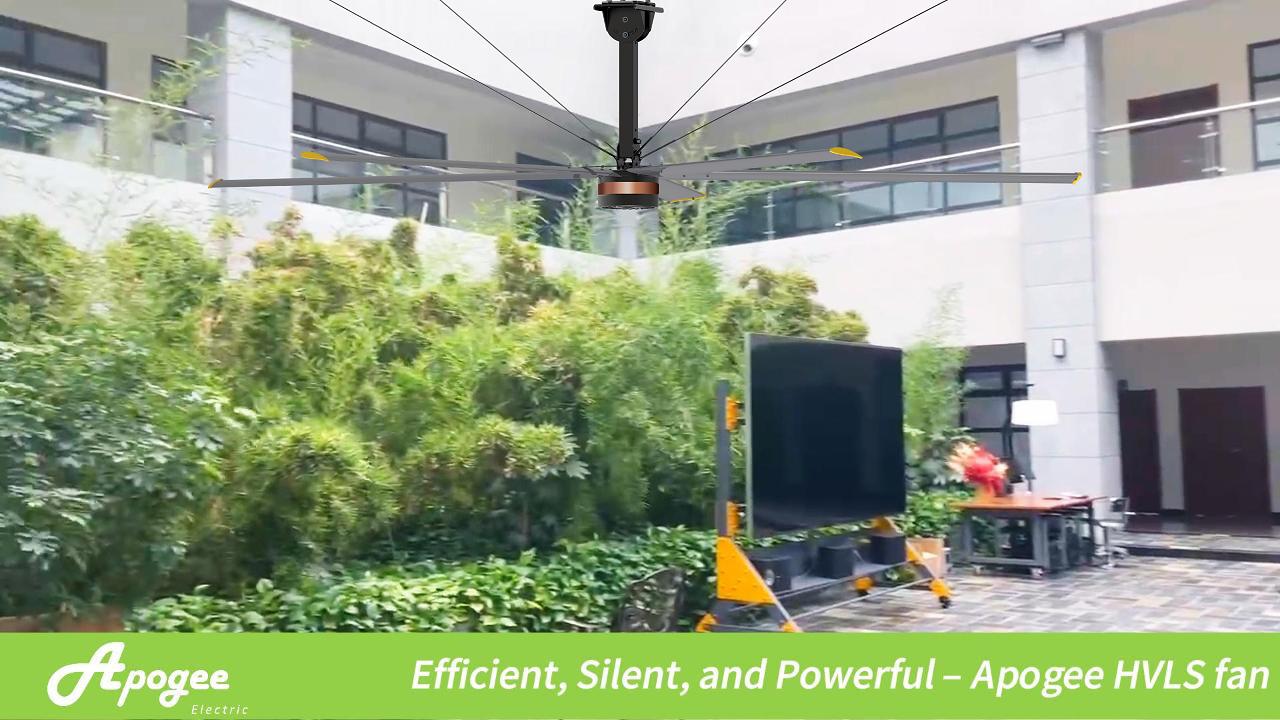
Electronics assembly lines require controlled ambient conditions to safeguard against static discharge, dust contamination, and thermal expansion of mechanical alignment jigs. Apogee PMSM HVLS fans deliver quiet (under 38dB), vibration-free air volume movement. By maintaining uniform climate distribution across expansive cleanroom staging zones, these fans prevent thermal drift in high-tolerance calibration procedures.
4. Food, Beverage, and Pharmaceutical Packaging Manufacturing
Sanitation and strict environmental standards (HACCP/GMP guidelines) govern food packaging and pharmaceutical processing facilities. Stagnant air leads to mold growth and airborne bacterial accumulation in ceiling corners. Apogee's IP65-rated, washable HVLS fans circulate pristine air continuously, suppressing mold spore growth, eliminating overhead ceiling condensation, and maintaining consistent humidity levels without dropping dirty particulates onto production lines.
5. Aerospace and Heavy Transportation Equipment Hangars
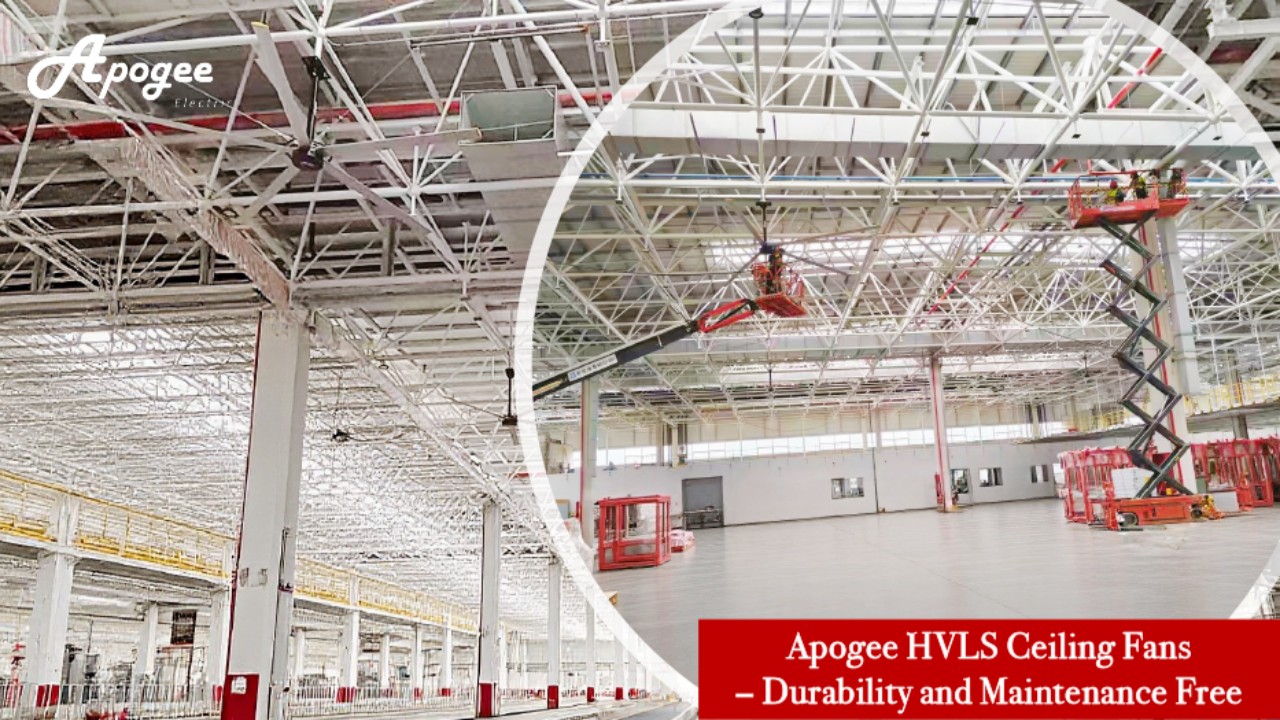
Manufacturing aircraft fuselages, locomotives, or heavy construction machinery requires sprawling open bays with high clearance. Standard wall fans or small ceiling fans cannot penetrate the massive structural volumes of these facilities. A single 24ft (7.3m) PMSM HVLS fan can cover up to 1,500 square meters of floor space, driving air under fuselage structures and surrounding work scaffolds for complete multi-dimensional coverage.
PMSM Direct Drive vs. Traditional Gearbox Motor Technology
The industrial HVLS industry has evolved beyond legacy asynchronous motors fitted with mechanical reduction gearboxes. Modern industrial manufacturing plants overwhelmingly specify Permanent Magnet Synchronous Motor (PMSM) technology due to its superior efficiency, silence, and reliability.
Traditional Gearbox HVLS Fans
- High mechanical friction loss with gear transmission (IE2/IE3 motor ratings).
- Requires periodic oil changes and seal replacements; risk of oil leaks onto factory floors.
- Elevated operational acoustic output (>65dB) causing environmental noise fatigue.
- Bulky structure with high total weight, creating increased structural ceiling stress.
- Higher long-term maintenance labor and downtime costs.
Apogee PMSM Direct-Drive HVLS Fans
- Ultra-high efficiency (IE4 standard) with up to 92% direct drive motor efficiency.
- Zero gear maintenance, no lubrication required, 100% leak-free seal safety for clean floors.
- Whisper-quiet acoustic performance at 38dB for comfortable worker environments.
- Compact size and lightweight aluminum alloys for fast, safe installation on standard roof trusses.
- Smart frequency inverter integration for precise vector control and BMS connectivity.
Strategic ROI & Sustainable Energy Optimization Framework
For facility managers and operational directors, introducing Industrial HVLS fans into industrial manufacturing sites presents a clear capital return profile. Energy costs account for a massive percentage of overhead in modern manufacturing. HVLS technology directly targets HVAC system inefficiencies.
Summer Cooling Offset
Running HVLS fans alongside centralized industrial chillers enables facilities to raise thermostat settings by 3°C to 5°C without compromising worker thermal comfort. This practice lowers air conditioning energy usage by up to 25–30%.
Winter Heat Recovery
In cold seasons, roof-level heat accumulation is driven back down to ground level by slow, reverse/forward blade rotation, recovering wasted heat and reducing heating fuel consumption by up to 30%.
Extended HVAC Lifespan
By relieving stress on primary heating and refrigeration systems, industrial plants extend the operational lifecycle of costly compressor units and reduce frequency of major capital replacements.
Apogee Electric: Pioneering Industrial Microclimate Engineering
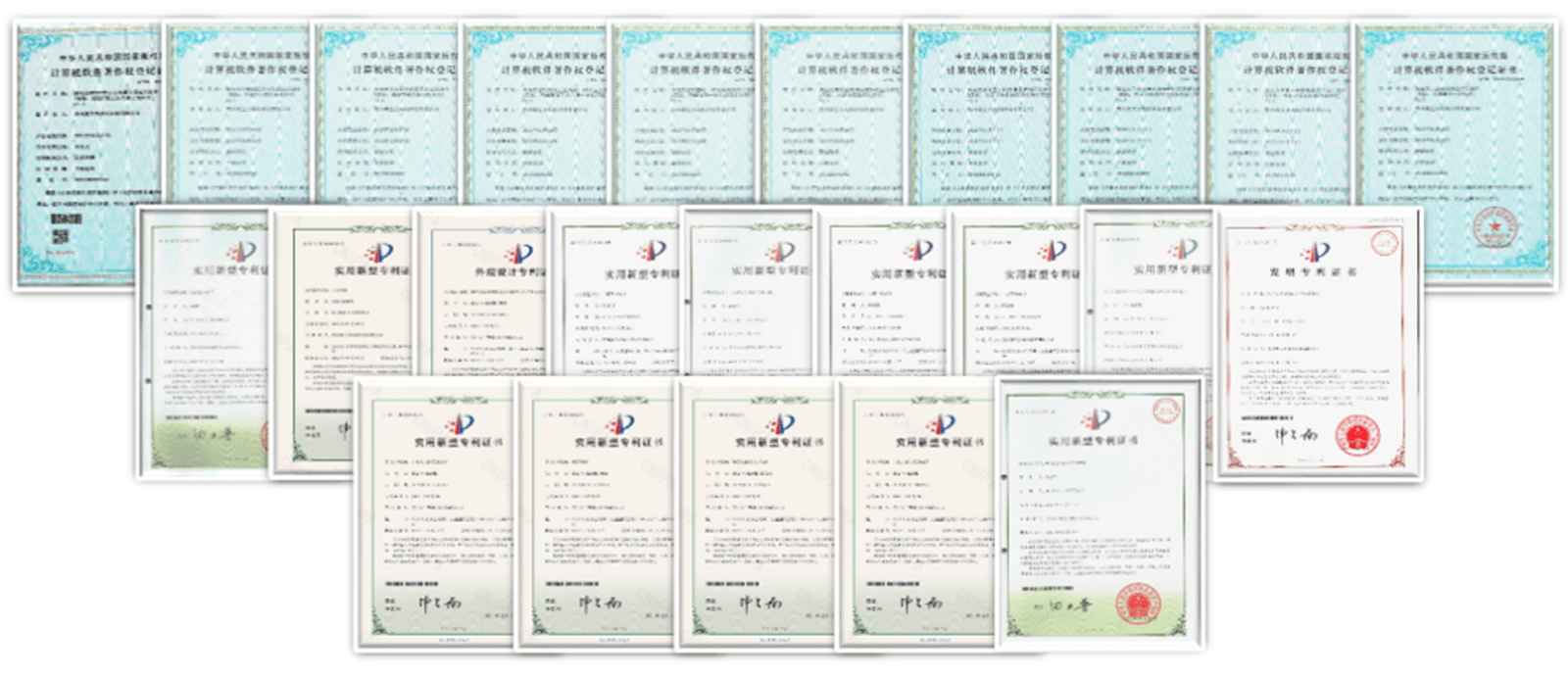
Established in 2012, Apogee Electric has grown into a premier national high-tech enterprise specializing in PMSM motor technology, intelligent motor driver algorithms, and commercial/industrial HVLS cooling solutions. Holding ISO9001 quality management system certification and over 40 intellectual property rights, Apogee is recognized as an industry benchmark in efficiency and mechanical design.
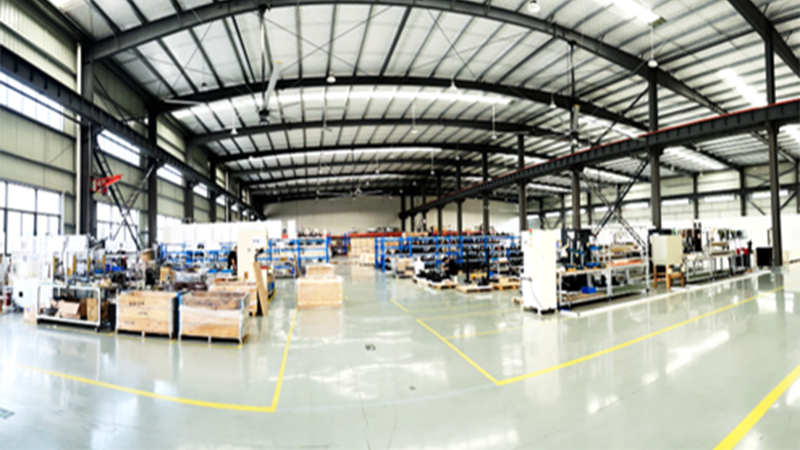
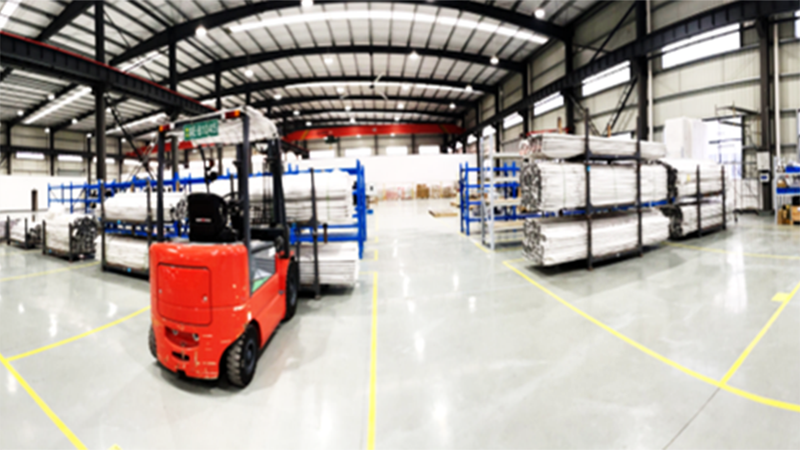
To support global industrial demand, Apogee established a state-of-the-art manufacturing facility in Wuhu city in 2022. Spanning over 10,000 square meters, this facility boasts an annual manufacturing capacity of 20,000 sets of HVLS fans and 200,000 sets of PMSM motor and control systems. With a dedicated team of over 200 engineers, technicians, and production specialists, Apogee offers end-to-end climate solutions tailored to modern Smart Factories.
Strategically located in Suzhou, just 45 minutes from Shanghai Hongqiao International Airport, Apogee warmly invites global clients, EPC contractors, and industrial partners to tour our manufacturing lines and explore custom OEM/ODM solutions.
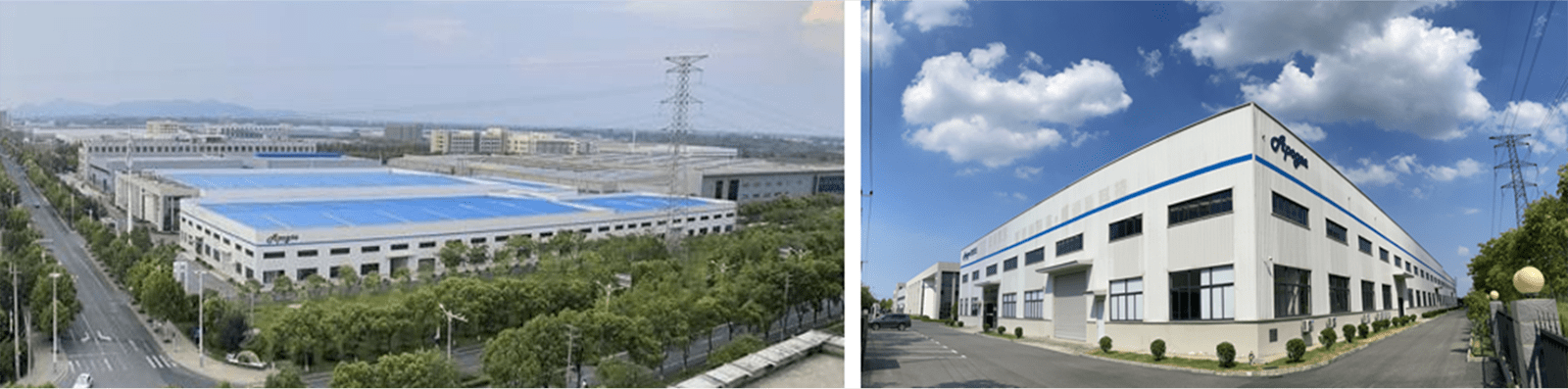
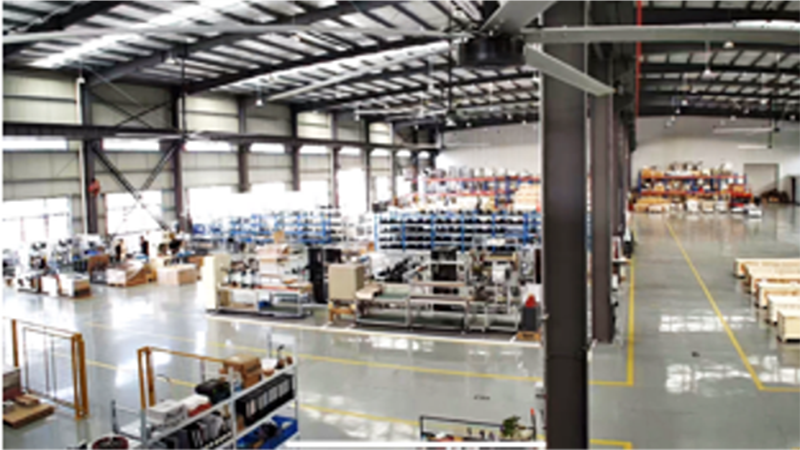
Manufacturing Facility & Operation Base



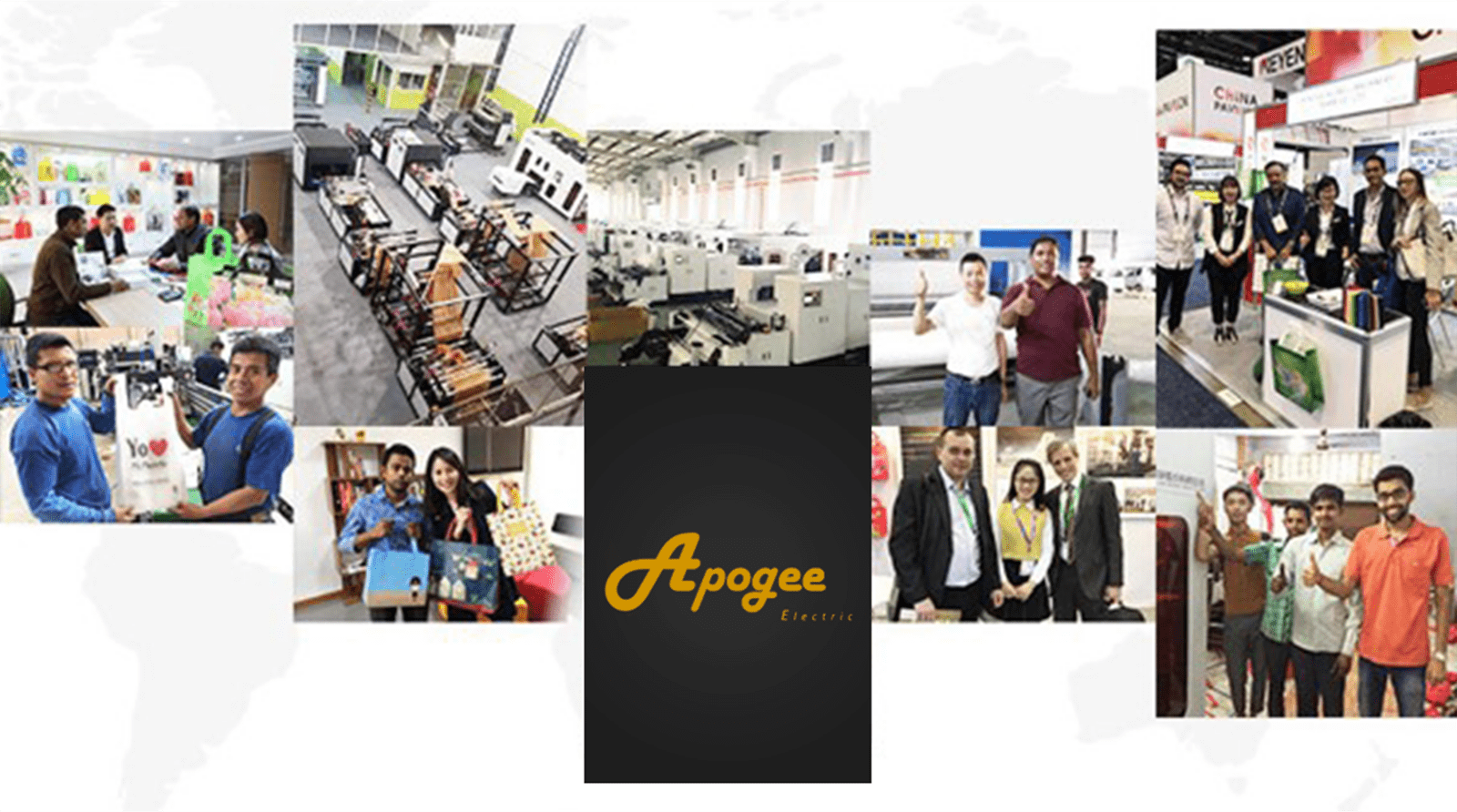
Our Global Partners
Certifications & Qualifications