

HVLS For Airport Terminals

Advanced Airflow Solutions for Modern Aviation Infrastructure

The Strategic Evolution of HVLS for Airport Terminals

In the high-stakes environment of modern aviation infrastructure, the integration of HVLS (High Volume Low Speed) fans for airport terminals has transitioned from a luxury to a technical necessity. Airport terminals are unique architectural challenges: they feature soaring ceilings, expansive glass facades that invite massive heat gain, and a constant, fluctuating flow of thousands of passengers. Traditional HVAC systems often struggle to maintain uniform temperatures in these cavernous volumes, leading to "dead zones" where air stagnates and energy costs skyrocket.

Industrial Status: The New Standard in Aviation HVAC

Currently, global aviation hubs are under immense pressure to achieve "Net Zero" carbon emissions. HVLS technology sits at the intersection of this environmental goal and the demand for passenger comfort. By moving massive volumes of air at low speeds, these fans create a natural evaporative cooling effect, making passengers feel up to 6°C to 8°C cooler without the extreme energy draw of traditional air conditioning units. In many modern terminals, HVLS fans are being integrated directly into the Building Management Systems (BMS) to optimize airflow based on real-time passenger density.

Deep Application Scenarios in Airport Terminals

The application of HVLS fans within an airport is not a "one-size-fits-all" solution. Different zones require specific airflow strategies:

  • Check-in Halls & Atriums: These areas often have the highest ceilings. HVLS fans prevent air stratification, pushing the warm air trapped at the ceiling back down to the floor level during winter and providing a gentle breeze in summer.
  • Security Screening Areas: High stress and high density make these areas prone to overheating. HVLS fans provide consistent air movement that helps calm passengers and improve the working environment for security personnel.
  • Baggage Claim: Often located in lower-ceiling or semi-enclosed areas, baggage claims can become humid and stuffy. Compact HVLS models ensure constant air turnover to prevent odors and moisture buildup.
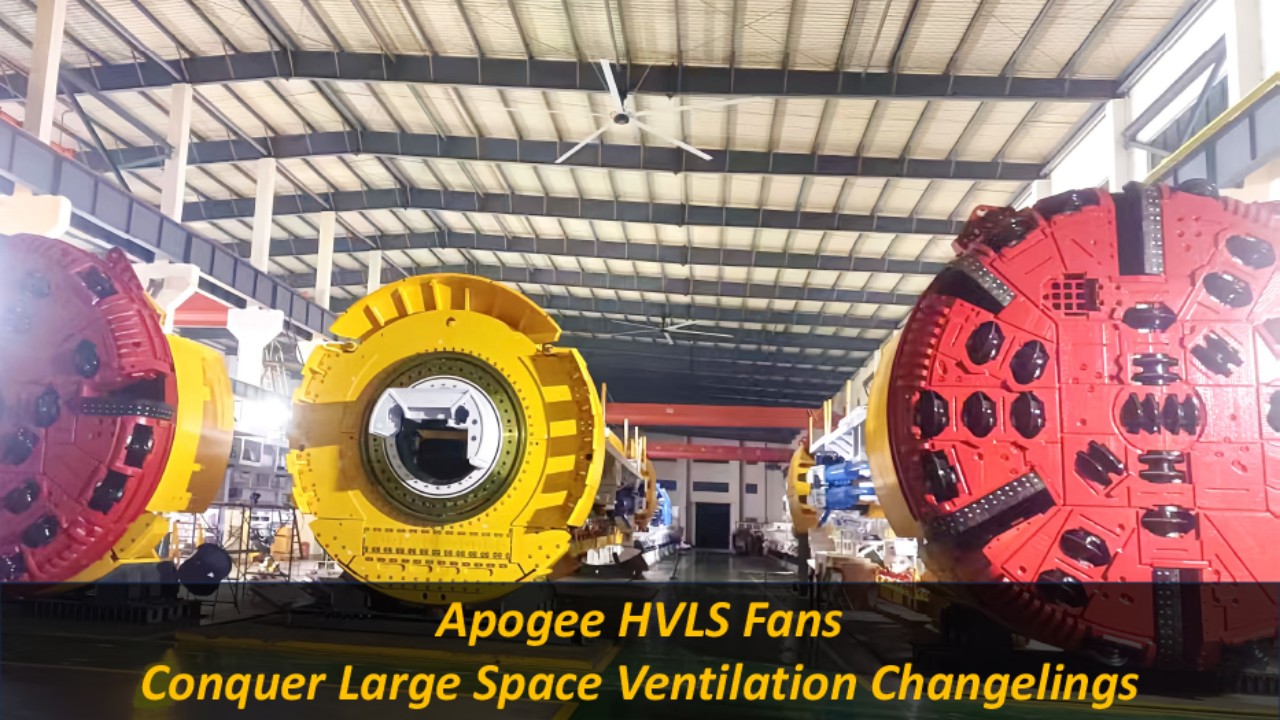
  • Maintenance Hangars: Beyond the passenger terminal, HVLS fans are critical in hangars where technicians work on aircraft. These fans help dissipate fumes and maintain a manageable working temperature in unconditioned spaces.

About Apogee Electric

Apogee Electric was established in 2012, awarded with national Innovative and high-tech enterprise certificate, we have PMSM motor and motor control core technology, The company is an ISO9001 certified company and has more than 40 intellectual property rights for PMSM motor, motor driver, and HVLS FAN.

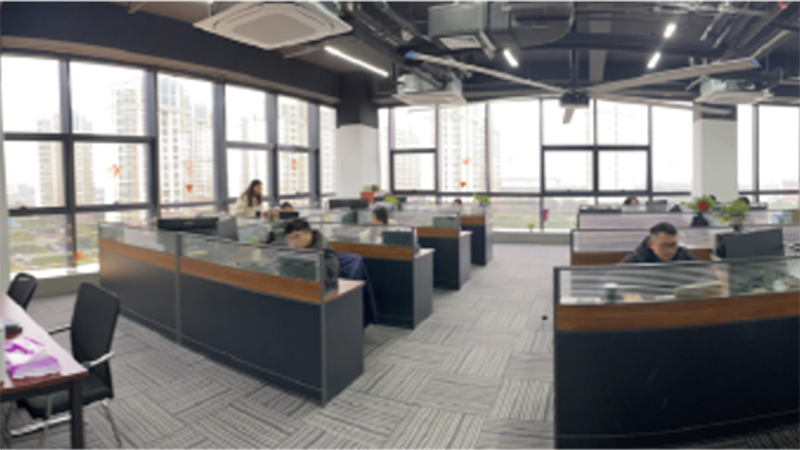
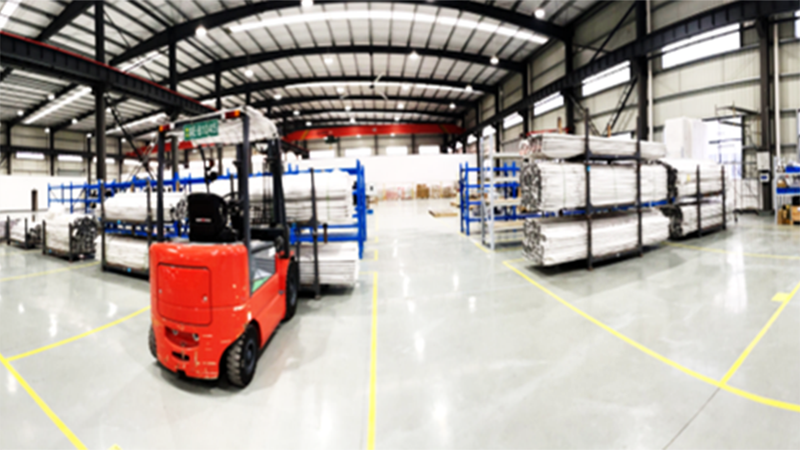
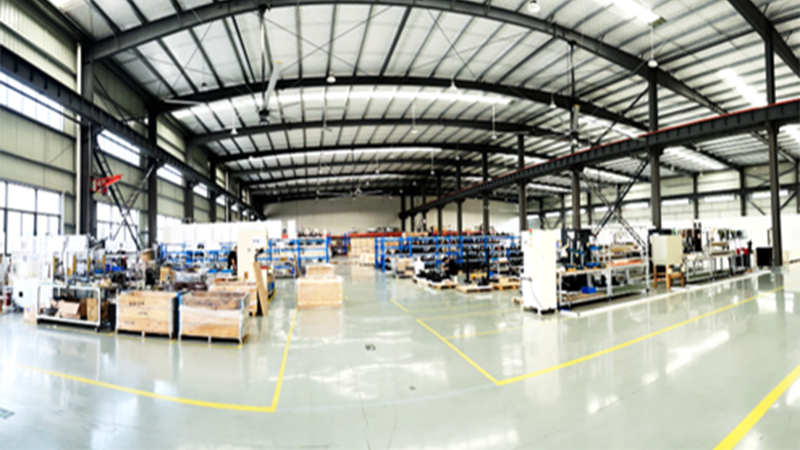
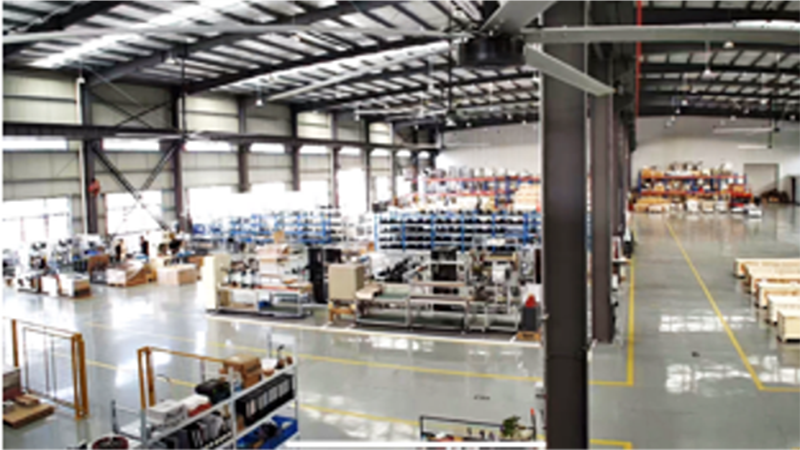
In 2022, we established a new manufacturing base in Wuhu city, over 10,000 sqm, the production capacity can reach 20K sets HVLS Fans and 200K PMSM motor and control systems. We’re the leading HVLS fan company in China, we have more than 200 people, dedicated in developing and manufacturing HVLS fans, cooling and ventilation solutions. Apogee PMSM Motor technology brings small size, light weight, energy saving, smart control to enhance product value. Apogee is located in Suzhou, 45 minutes away shanghai Hongqiao international airport. Welcome to visit us and become Apogee customers!
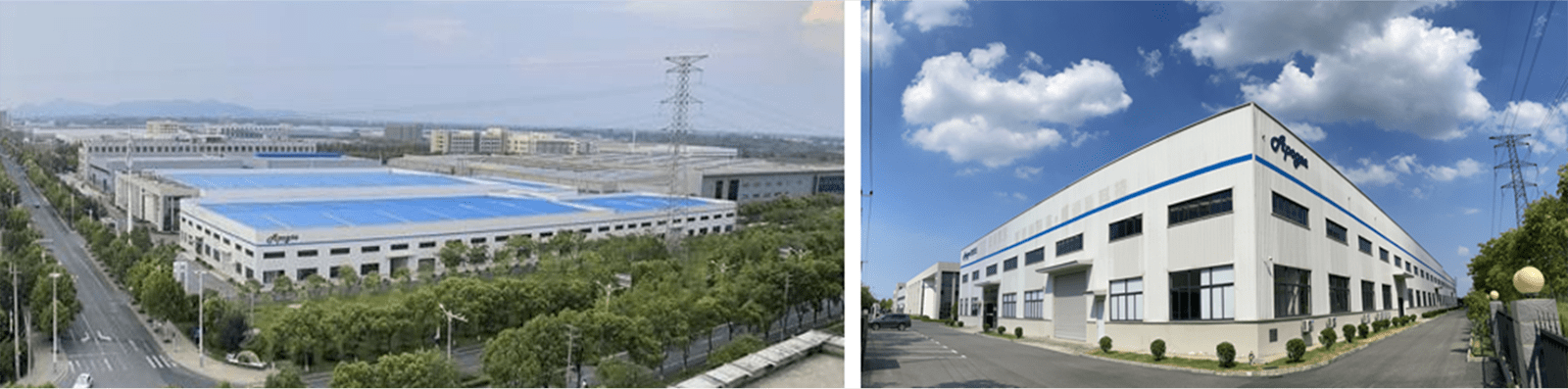
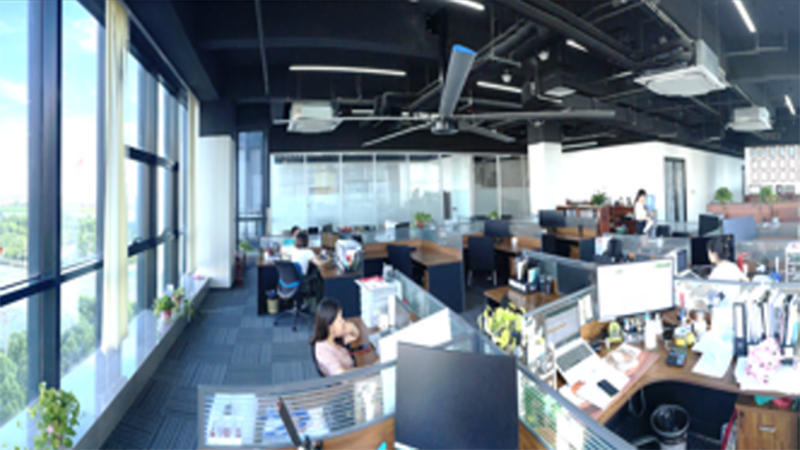
✈ Factory Tour
Apogee Factory Tour

Technological Trends: AI and PMSM Integration

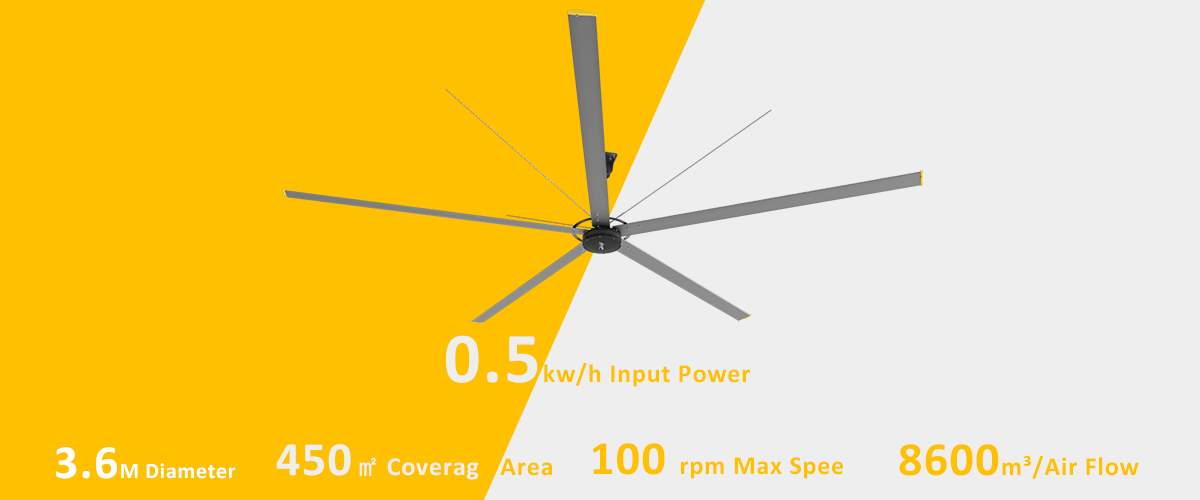
The future of HVLS for airport terminals lies in intelligent automation. The shift from traditional induction motors to Permanent Magnet Synchronous Motors (PMSM) has been revolutionary. Apogee Electric’s PMSM technology offers significant advantages:

Energy Efficiency

PMSM motors eliminate the friction and energy loss associated with gearboxes. In an airport operating 24/7, the energy savings compared to traditional fans can reach up to 30%, significantly impacting the terminal's operational budget.

🔇

Acoustic Comfort

Airport terminals are noisy environments. PMSM-driven HVLS fans operate at levels as low as 38dB—quieter than a library. This ensures that flight announcements and passenger conversations are never disrupted by mechanical hum.

The Role of AI and Smart Controls

Modern HVLS systems are no longer just "on or off." AI-driven sensors now monitor temperature, humidity, and CO2 levels. In an airport terminal, this means the fans can automatically increase speed during the mid-day heat or when a large flight arrives and the passenger density increases, then slow down during quiet night hours to conserve energy.

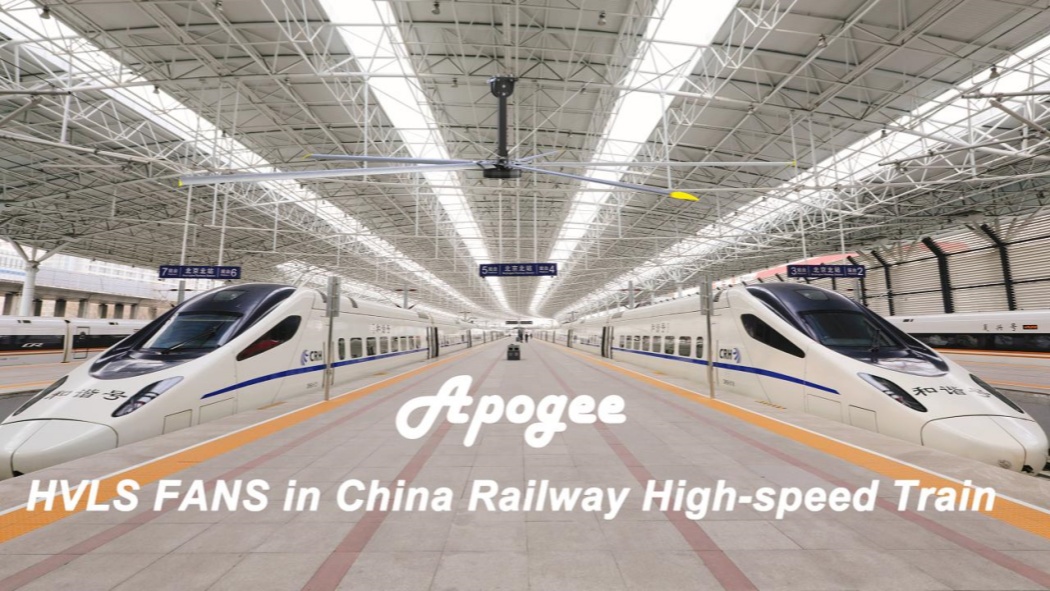
Furthermore, the Safe for Railway Station and Airport Terminal certifications ensure that these fans meet the most stringent safety standards, including redundant safety cables, blade retention systems, and fire alarm integration that automatically shuts down the fans in case of an emergency.

Global Recognition & Partnerships

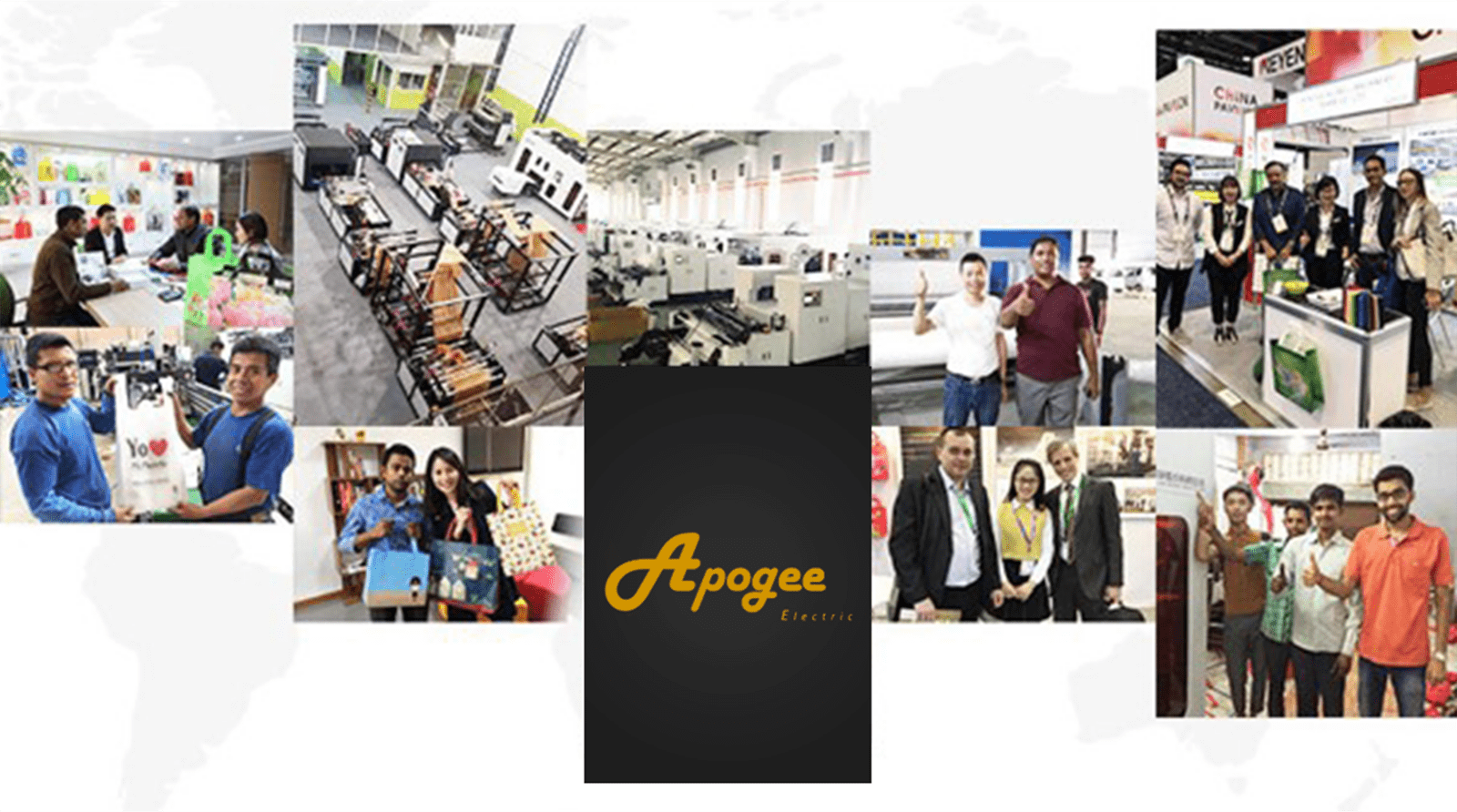
Apogee's commitment to quality is reflected in our global footprint and industry certifications.

Our Partners Apogee Certificates

Conclusion: Investing in the Future of Terminal Comfort

Choosing the right HVLS for airport terminals is a decision that impacts passenger satisfaction, operational efficiency, and environmental stewardship. As airports continue to evolve into "aerotropolises"—mini-cities that never sleep—the demand for reliable, quiet, and energy-efficient ventilation will only grow.

Apogee Electric remains at the forefront of this industry, providing bespoke solutions that combine our patented PMSM technology with a deep understanding of large-scale architectural requirements. Whether it's a new terminal project or a retrofit of an existing facility, our HVLS fans provide the cooling and ventilation necessary to keep the world moving comfortably.

Innovative Airflow | Sustainable Energy | Passenger Comfort

whatsapp